STORY AND RECIPE BY MACKENZIE FAUMUINA RUBISH PHOTOGRAPHY BY TYLER WHITBREAD |
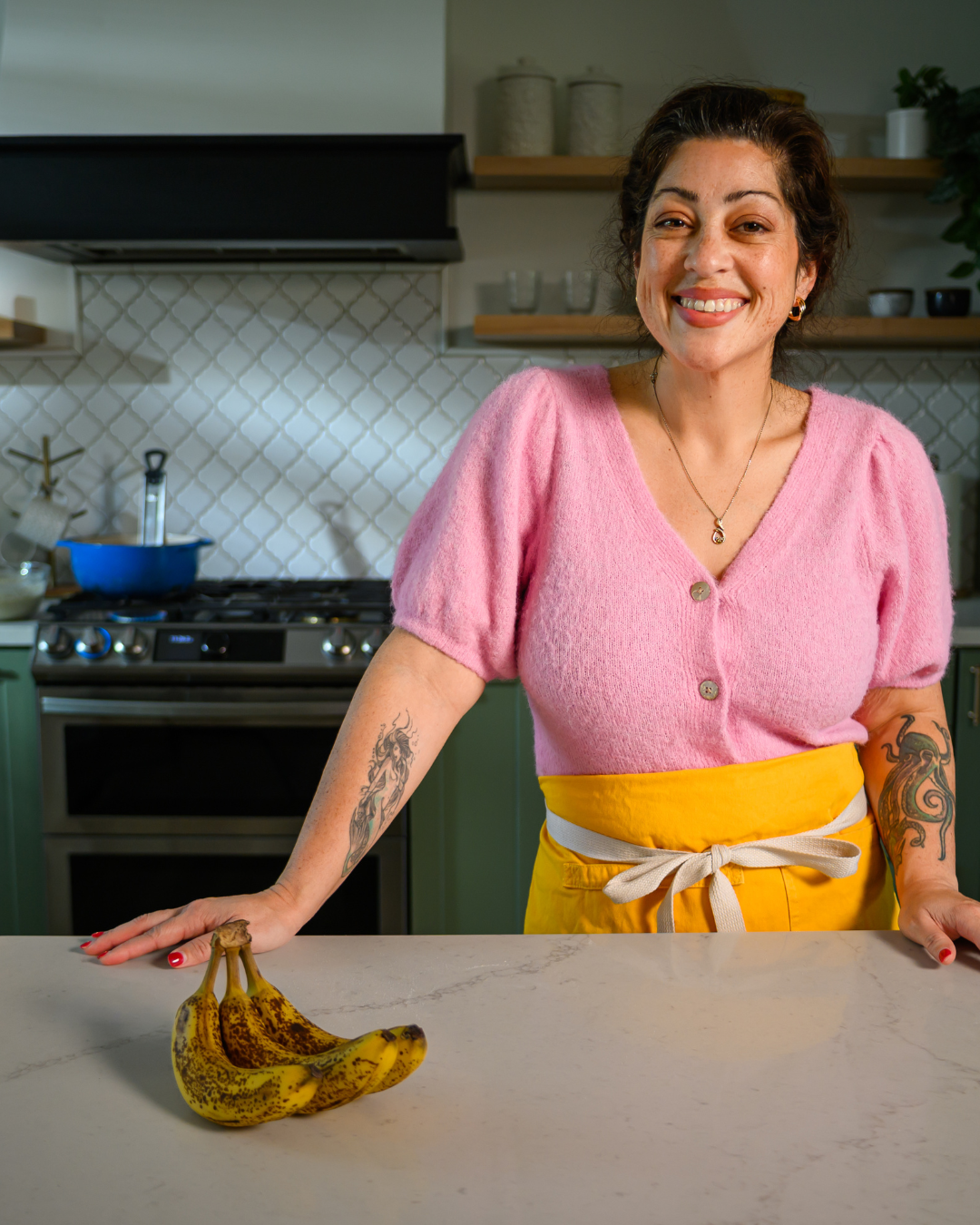
This recipe is so good, it's bananas |
|
|
|
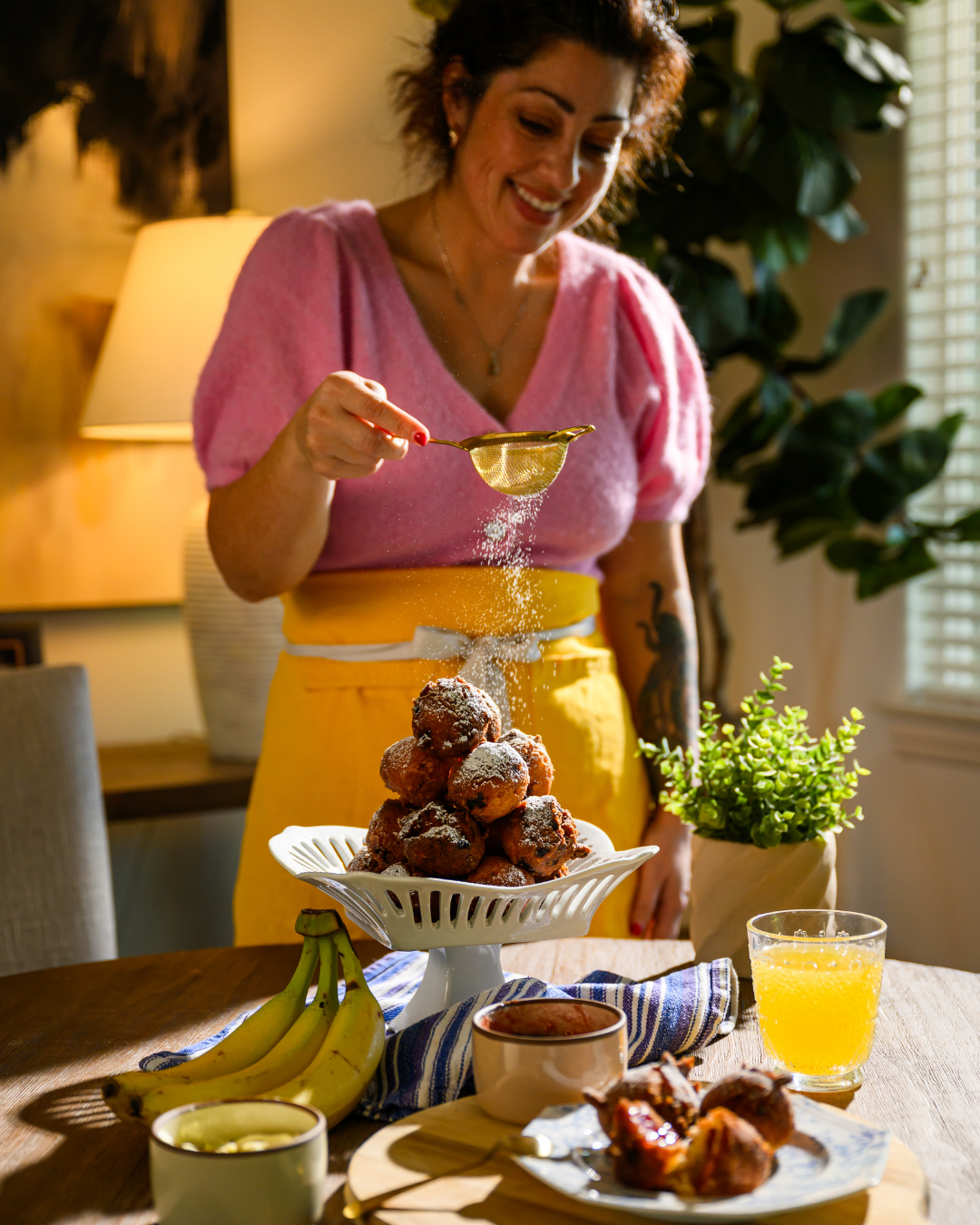
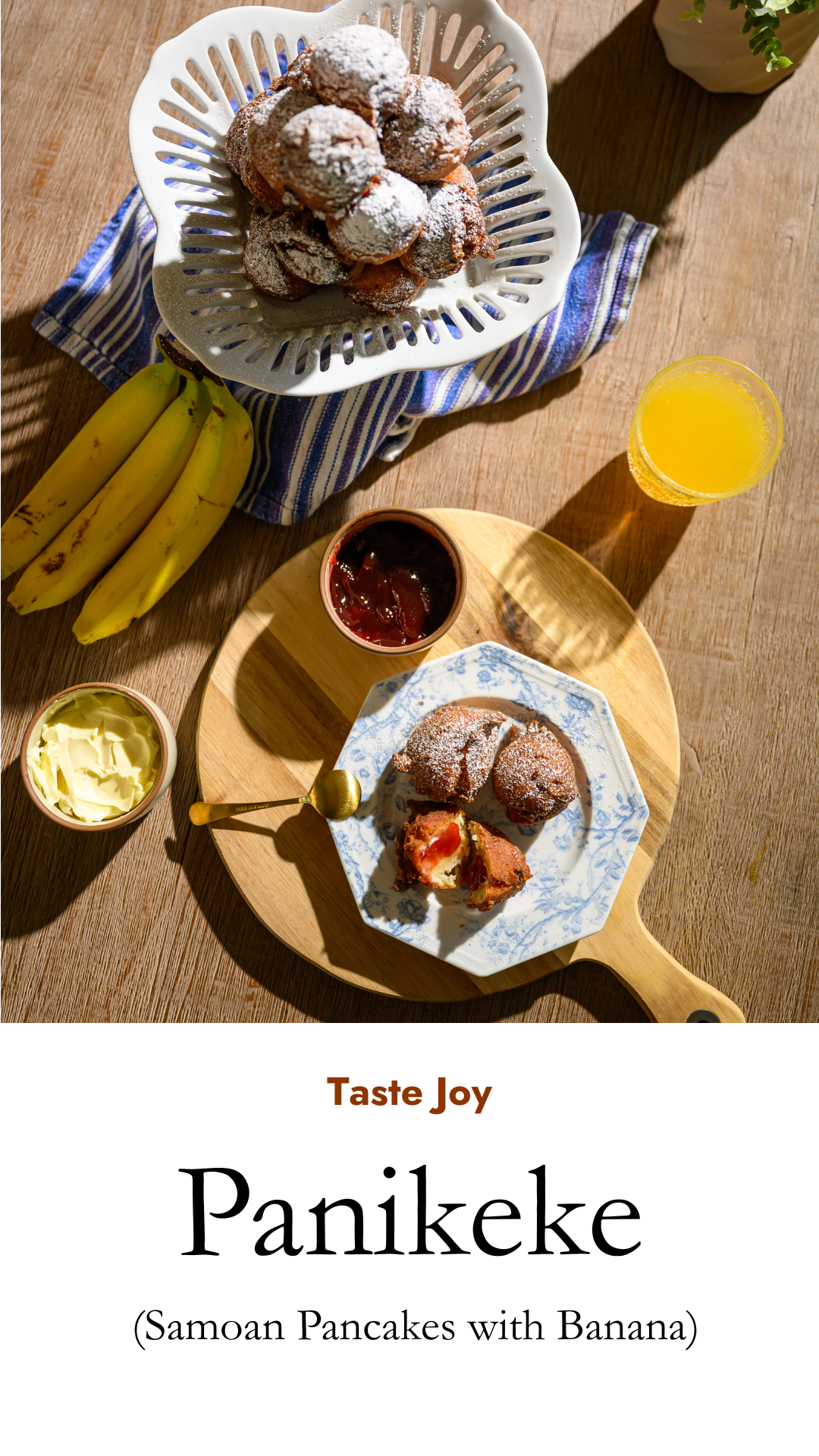
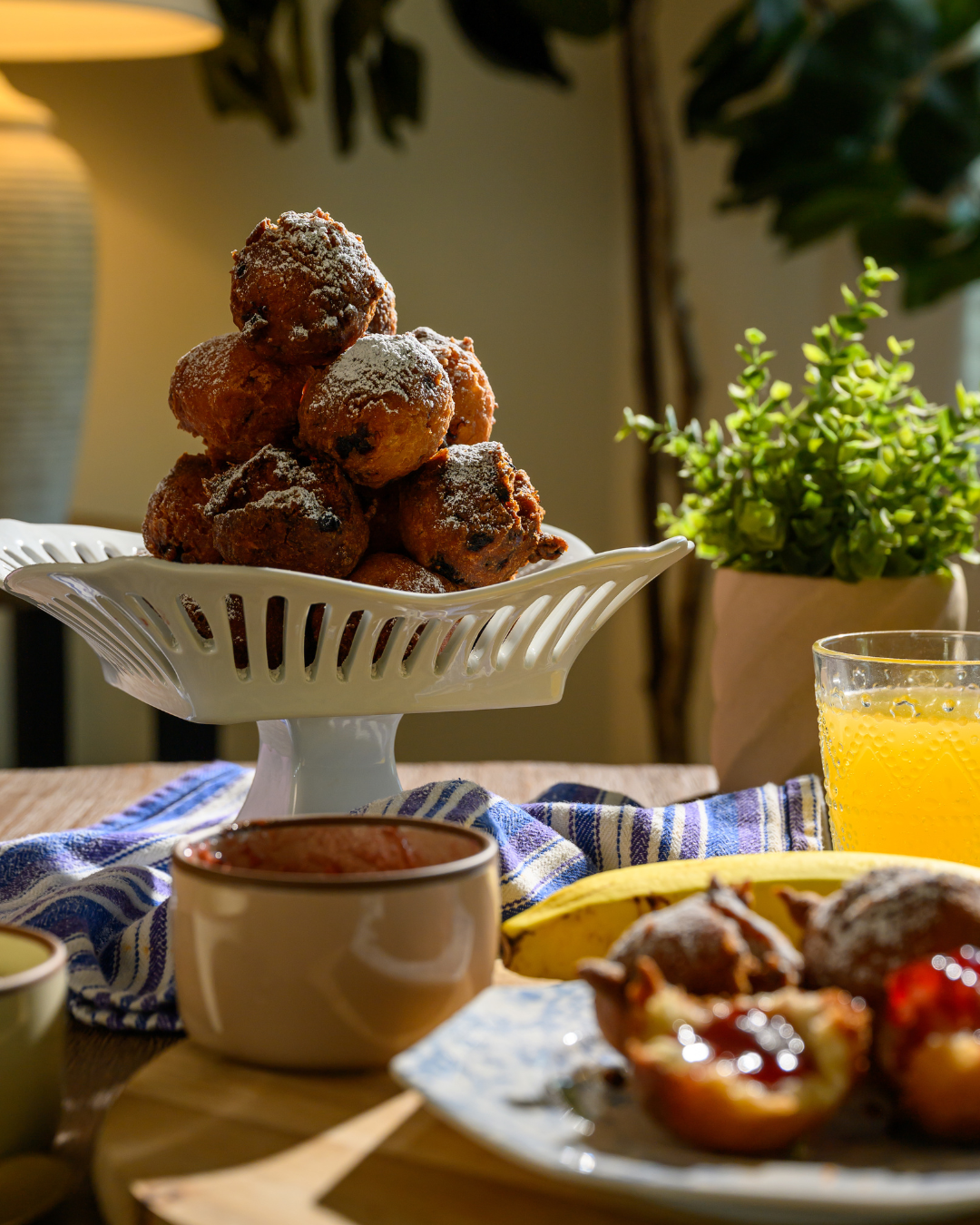
In the culinary landscape of San Diego’s Samoan community, few items are as ubiquitous as the Panikeke. While its name is a transliteration of the English word pancake, this deep-fried, banana-based treat is a distinct departure from the flat, syrupy stacks found at a typical American diner. It is a portable, golden-brown sphere that represents the ingenious way Pacific Islanders adapted European influences into something uniquely their own. |
|
|
Historically, the Panikeke emerged as a fusion food. When flour and sugar were introduced to the islands by traders and missionaries, Samoan cooks integrated them with local staples—most notably the banana. The result was a dense, flavorful snack that didn't require an oven, making it a perfect fit for traditional cooking methods. |
| |
In our family, this tradition didn't start in the islands, but right here in San Diego. I grew up watching my grandmother master the art of the panikeke in her kitchen. She didn't need a thermometer to know when the oil was ready; she relied on a lifetime of experience. For me, breakfast meant a plate of these hot, banana-scented rounds. My favorite way to eat them was—and still is—split open with a bit of butter and jam. My cousins, however, always took a different route, opting to slather theirs in peanut butter for a heavier, savory-sweet kick.
The accessibility of ingredients in San Diego has kept this tradition alive. While grandmas in Samoa might use varieties like misi luki bananas, we’ve adapted to using the ripened fruit found at local markets around town. The process remains a staple in my own household today. Now, I’m the one standing at the stove, dropping batter into the oil while my children wait nearby. Unlike the more complex toppings of my childhood, my kids prefer them simple: grabbed warm and finished with a light dusting of powdered sugar.
Panikeke thrives because it is efficient and consistent. It’s a reliable crowd-pleaser that transitions perfectly from a quick family breakfast to a large community gathering. By continuing to cook these for my children, we aren't just making a snack; we’re maintaining a tangible link to a culinary history that moved across the ocean and found a permanent home in San Diego. |
|
|
Makes 2 dozen
2 medium ripe bananas 3 ½ cups all-purpose flour 1 ½ cups granulated sugar 1 teaspoon baking powder ½ teaspoon cinnamon (optional) 1 ½ cups water Frying oil (vegetable or canola)
Peel two medium-sized ripe bananas and place them in a large bowl. Mash the bananas using a fork until smooth. Add flour, sugar, baking powder, and cinnamon to the mashed bananas. Stir everything together with a wooden spoon.
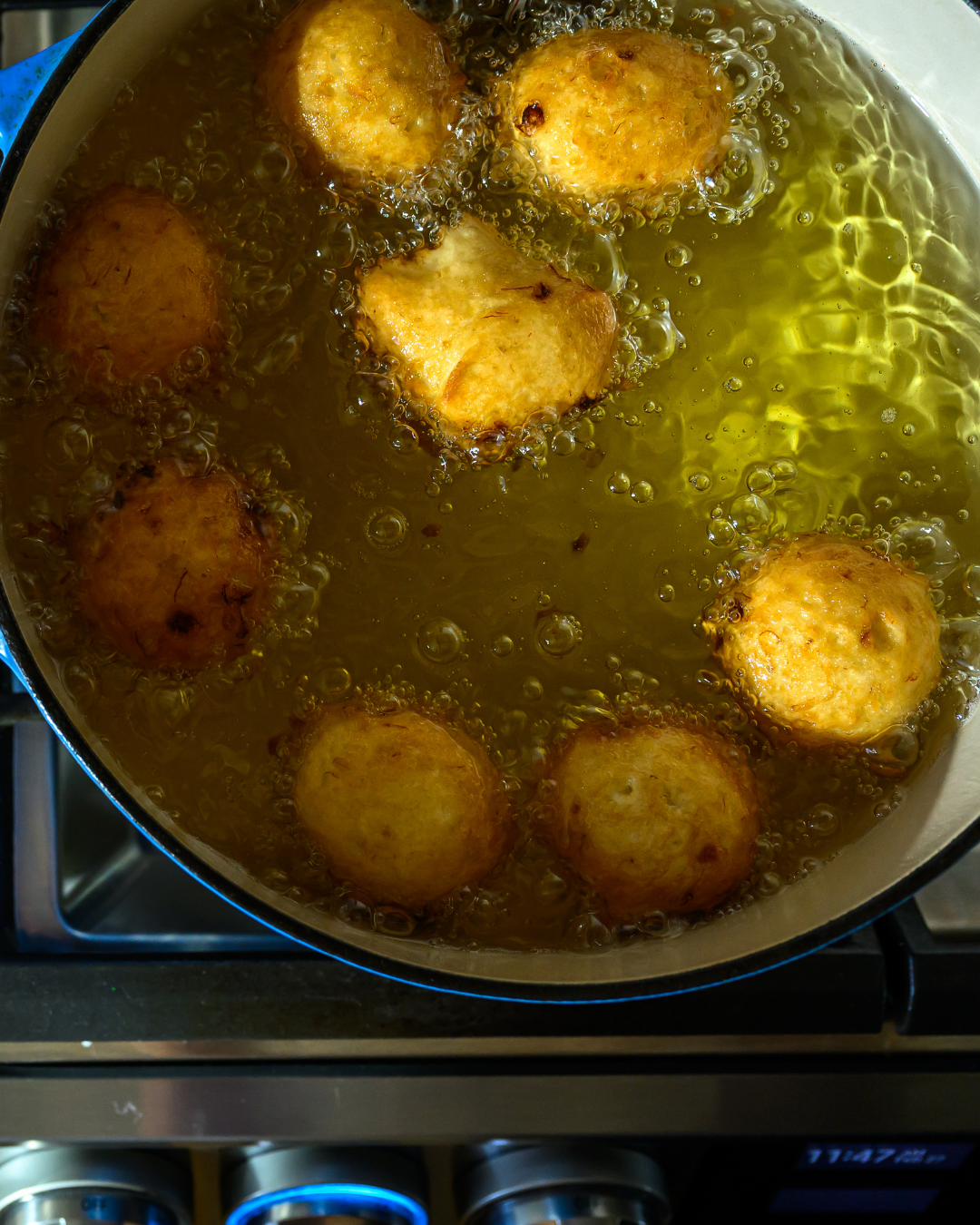
Gradually add water to the mixture, stirring until the batter is thick, sticky, and scoopable—ideal for forming dough balls to fry. In a large pot or Dutch oven, add enough oil to reach a depth of 3 inches for frying. Set the heat to medium and heat the oil until it reaches 360°F.
Carefully drop dough balls into the hot oil using an ice cream scooper or large spoon. To prevent splattering, gently lower the dough. Fry for 6 to 7 minutes until they turn golden brown. Use a fork or chopstick to flip for even frying. Remove the Panikeke with a slotted spoon or spider strainer and place them on a paper towel-lined plate to cool. Enjoy with butter, jam, or peanut butter, or savor them plain. |
|
|
Mackenzie Faumuina Rubish is a first-generation American Samoan born and raised in Oceanside, California. She is the 2024 winner of The Great American Baking Show and the founder of Pasifika Culinary Project, a nonprofit on a mission to promote Samoan and Pacific Islander culinary heritage through education, community engagement, and cultural preservation. Find more of her personal stories and recipes on Substack.
|
| |
|
Save Mackenzie's recipe for a three-ingredient coconut caramel sauce on EDIBLESANDIEGO.COM |
Flavors of Samoa: Coconut |
Let’s talk about the superstar of Samoan cuisine—the coconut! Dubbed the “tree of life,” this amazing fruit is a true island treasure, offering nourishment, flavor, and a heartwarming link to tradition. In the lush paradise of Samoa, coconuts are everywhere, and their use goes way beyond just being food; they symbolize hospitality and community spirit.
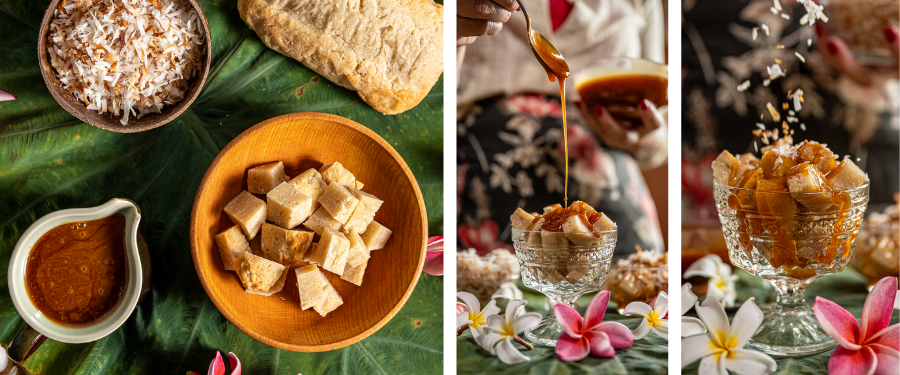
Fa'ausi (Samoan coconut bread with coconut caramel sauce)
Fa’ausi comprises two recipes. First, you will make Fa’apapa, a dense coconut bread that can be enjoyed on its own. Then, you’ll make Fa’ausi, which is both the name for a coconut caramel sauce and the resulting dessert enjoyed when the two recipes are combined. |
|
|
MAKE THE MOST OF THE WINTER SEASON |
|
|
|
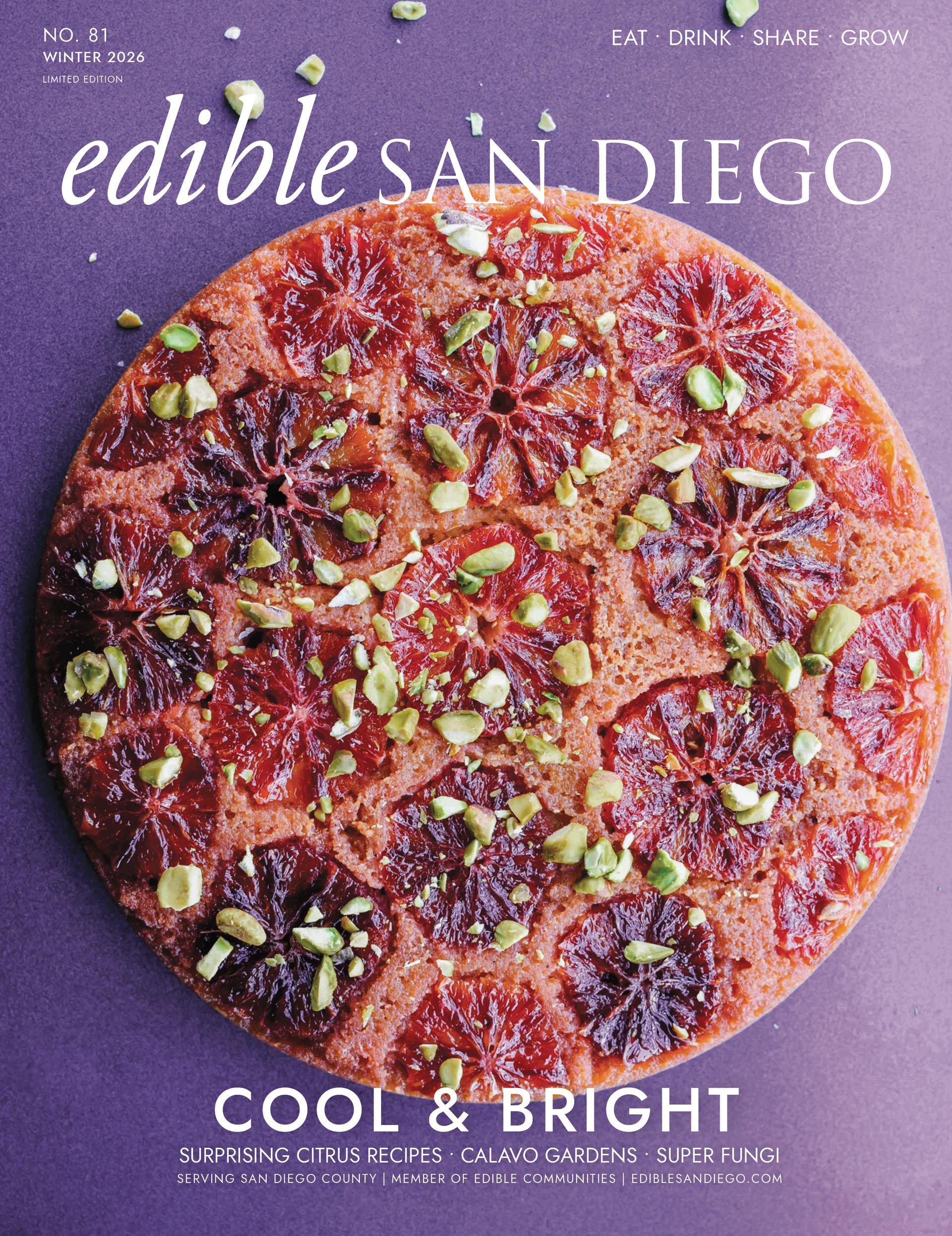
This winter, stay in the moment to savor the small things that make San Diego County's foodscape COOL & BRIGHT COVER BY OLIVIA HAYO FOR EDIBLE SAN DIEGO. |
|
|
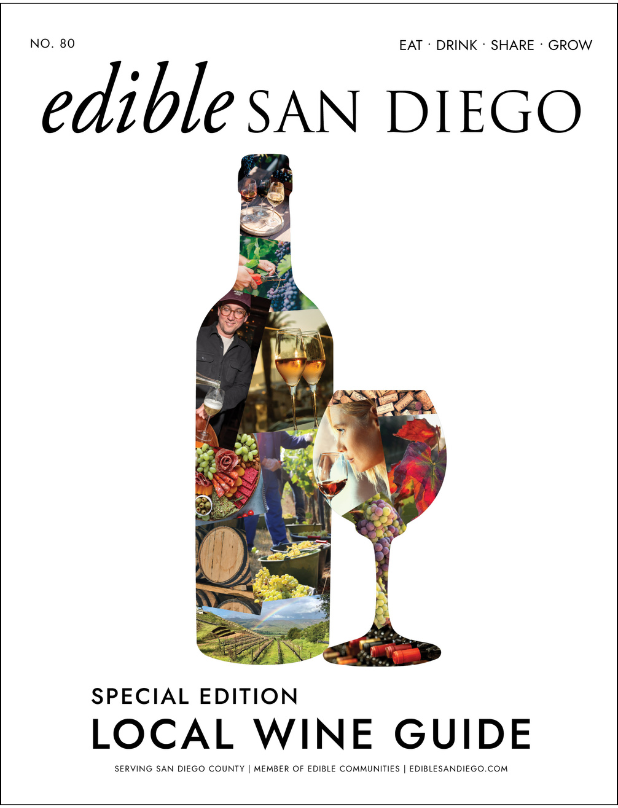
Did you know that San Diego County is home to over 100 wineries? And that there is a burgeoning wine country within a 30-minute drive from your front door?
If not, let's change that. COVER ART BY JIM MILLER FOR EDIBLE SAN DIEGO. |
| |
|
Join us in thanking these local businesses for supporting award-winning and mission-driven editorial as digital-exclusive advertising partners |
|
|
Supporting small, local, independent businesses is our passion because we are one
» Become an advertiser |
LAND ACKNOWLEDGEMENT
Edible San Diego recognizes the Kumeyaay, Luiseño/Payómkawichum, Cahuilla, and Cupeño/Kuupangaxwichem people who have lived in relationship with the earth, flora, fauna, waters, and sky for thousands of years as the original stewards of this region. This publication commits to building greater awareness of and appreciation for the traditional ecological knowledge, wisdom, and experiences of San Diego County’s first peoples as an essential part of the health and vitality of our local food system.
|
|
|
|